

Some bonds are tested by time, distance, and life’s hardest moments—but never broken. This is a story of two sisters whose love endured through every struggle, proving that family isn’t defined by perfection, but by unwavering presence. Their journey is a reminder that some connections truly last forever. – The Editor
“But What About Me? A Sibling’s Perspective”
She was basically perfect.
It is hard to follow perfect.
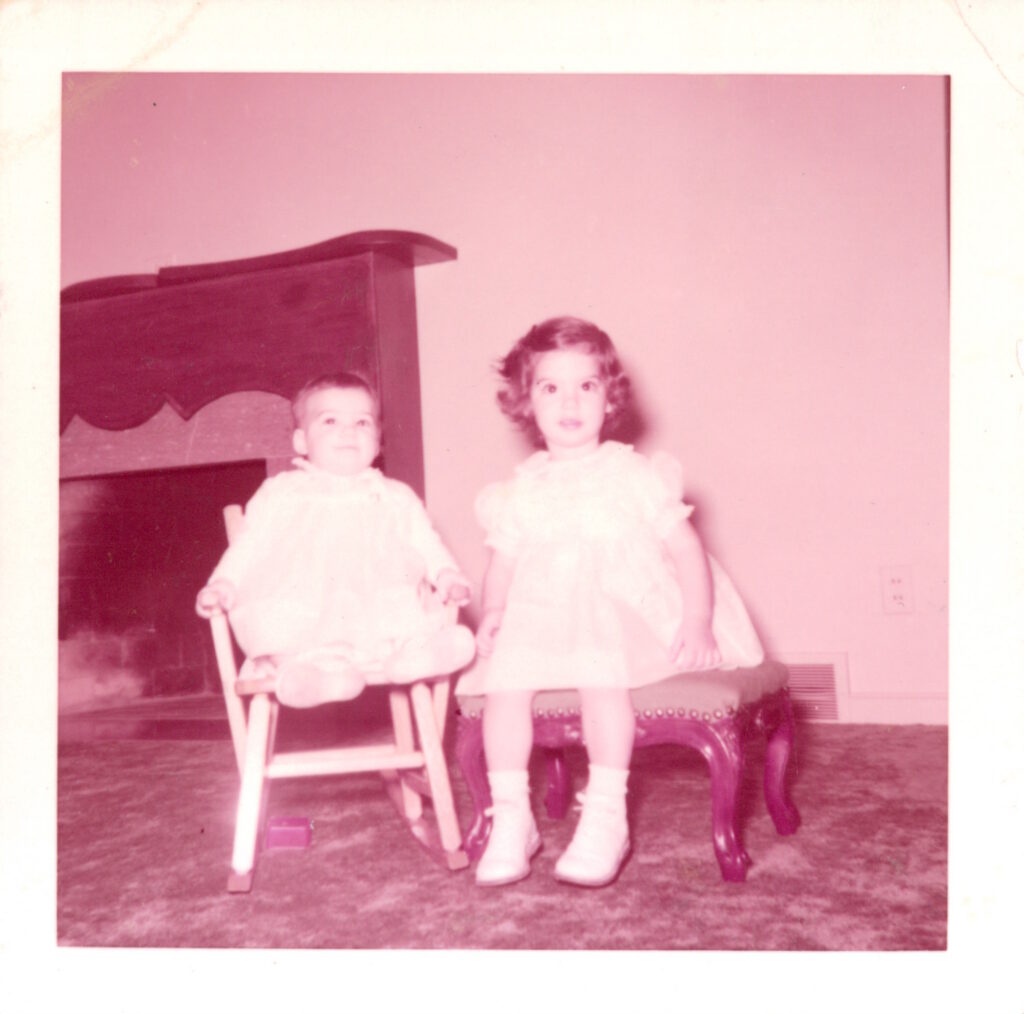
Marianne’s hair was straight. Mine was curly. She was thin, I was chunky. She was graceful, I was clumsy. She was pretty, I was not. She was 15 months older and my sister.
My parents thought that my differences from Marianne must have been due to some defect.
In third grade, they took me to a child psychiatrist explaining that I was disobedient, talked back and was just a struggle for them to raise. I loved going to the psychiatrist. Her name was Dr. Clare Robinson. She focused on me completely. In fact, after two sessions, I was sure that when I grew up, I wanted to be a child psychologist.
As my sister and I got older our differences became even more apparent.
She got straight As in school. I got B’s and C’s, with check marks in “lacks self-control.”
We had a younger sister, Connie who was my pal. Connie was the baby in every way. Marianne mothered her and laughed with her.
Marianne and I fought constantly. Usually about girl things. I was a slob and my new clothes would be strewn across a chair or under the bed. I would secretly steal her very well-kept stylish clothes and strut down the high school hallway, in front of her, wearing her favorite new sweater.
She would tattle on me when I stepped out of line even the slightest. I was never a bad kid; I just wasn’t perfect.
My only saving grace was that I had a lot of friends. I found some refuge outside of my family.
Then, one day in late December of her senior year, she became sick. “Just the flu,” I thought, but my parents seemed concerned. We lived in a small town in Ohio, and back then, the doctor would come to our house.
Holed in our small bedroom, my younger sister Connie and I shared, we giggled, wondering what could be so wrong with Marianne that the doctor came to the house. We never imagined it would be serious.
In the middle of the night, I got up to use the bathroom. Marianne was in the bathroom, but she was not herself. She was talking unintelligibly and although I could understand her, the words she was saying made no sense.
I went back to bed but was awakened by the sound of an ambulance in our driveway.
Our parents, who, now I realize did not share very much with us, told Connie and me to get ready for school and everything will be alright.
We went to school that day, unconcerned.
That night, we stayed at our grandmother’s house, while our parents stayed at the hospital with Marianne.
Finally, over the telephone at my grandmother’s house, my mother told us, “They found something in Marianne’s stomach. They will operate tomorrow and it is a very difficult operation. Our hope is that everything will be fine.”
Connie was very quiet and always followed my lead. I immediately asked my parents, “What if the operation does not go well?” I remember so distinctly, now 46 years later that my mother responded, “Well, I guess we will lose our little Marianne.”
That haunted me. The sister I despised, mocked and was extremely jealous of, might die?
My younger sister and I went to school the next day and learned late in the day that the operation was successful.
Marianne had received a colostomy, and it would be reversed in a few weeks.
A few days later, Marianne died.
We were told that fluid was not going to her brain and her brain dehydrated. To this day, Connie and I are still unclear about how or why our sister died, but our lives changed forever.
Many people tell me that sisters fight—particularly as teens. I learned, after Marianne died. How much I loved her.
How I wish I could know her now.
When a child dies, most people’s concern is about the parents who have lost their child. Many well-intended visitors, hug the siblings and say, “Take care of your parents.”
“What about me?” I wanted to shout.
The perfect daughter is gone. My place in the family is gone. I am no longer the middle child; I am the eldest.
I was angry and filled with guilt. Did I wish she would disappear so my life would be easier? Did I make this happen?
For the next 38 years, until my mother passed away in June 2012, I worked to be the daughter my parents lost. The guilt and responsibility I felt never waned.
Now, at 63 years old, I still wonder who I really am.
My hope in writing this is that when the pain of death occurs in a family that people will also think about the siblings left behind. Think about how their role changes in the family and provide support for them.
Most of my high school friends grieved with me when my sister died. But like most situations after death everyone goes on with their lives, and you continue to mourn. This was true for most of my friends, except the family of my friend Amy. Without telling me, “the why”, Amy and her family invited me to events and took me on vacation and to dinner.
They realized the pain my family and I continued to face. They realized that our lives stopped and they brought me some normalcy. I will never forget their gift.
Amy and I remain good friends even today and I feel that I am close to her children and her grandchildren.
Her family taught me a different kind of love.
I am and will always be forever grateful.
About the Author
Denise currently lives in Denver, Colorado. She is married with two adult children of her own. Professionally she works in public relations and now hosts a podcast with her sister Connie. Not a day goes by that she does not think of Marianne.
For more stories like this, read: “How Becoming a Reiki Master Helped Me Build Resilience and Heal My Childhood Trauma”